
Plantar warts are small growths that develop on parts of the feet that bear weight. They're typically found on the bottom of the foot. Don't live with plantar warts, and call us today!
Plantar warts are small growths that develop on parts of the feet that bear weight. They're typically found on the bottom of the foot. Don't live with plantar warts, and call us today!
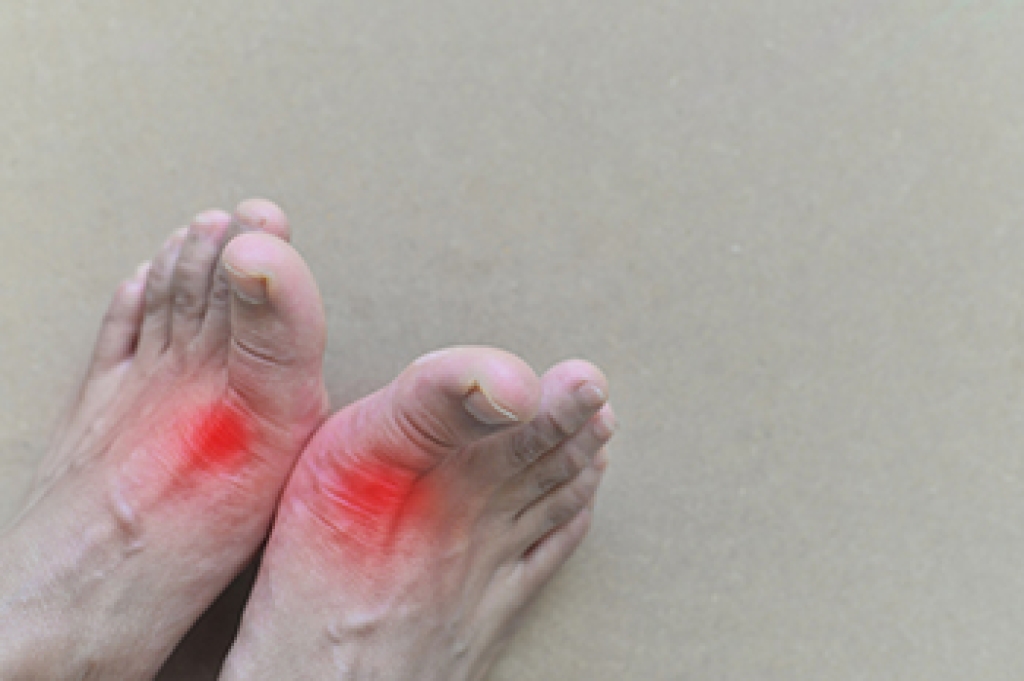
Sudden pain in the big toe can turn a routine step into an uncomfortable challenge. Gout is a painful type of arthritis that usually affects one joint at a time, often at the base of the big toe. It develops when excess uric acid, a waste product in the blood, forms sharp crystals in a joint. These crystals trigger inflammation that causes intense pain and swelling. Without treatment, repeated attacks and persistent crystal deposits damage joints and nearby bone. A podiatrist helps identify the problem and develops a treatment plan to relieve symptoms and protect foot function.
Episodes of worsening symptoms are called flares. They sometimes begin overnight, with pain severe enough to make even light pressure from a bedsheet uncomfortable. The affected joint often looks red and feels warm. Symptoms last for days or weeks, followed by periods without noticeable discomfort. However, the absence of pain does not always mean that crystal deposits have disappeared. Untreated gout sometimes leads to tophi, which are firm lumps of uric acid crystals beneath the skin. These deposits interfere with joint movement and make wearing shoes uncomfortable. Increasingly frequent flares warrant an evaluation, even when earlier episodes have resolved without treatment.
Several factors increase the likelihood of developing gout. Family history and reduced kidney function affect how the body handles uric acid. Excess body weight also raises the risk. Certain medicines and health conditions, including high blood pressure, contribute to elevated uric acid levels. However, a high uric acid level alone does not establish a gout diagnosis. A podiatrist reviews the patient's medical history and examines the painful joint. Blood tests help assess uric acid levels, while a sample of joint fluid reveals whether crystals are present. Imaging helps to assess joint damage or clarify an uncertain diagnosis. An examination also helps distinguish gout from an infection or injury.
Podiatric treatment addresses pain during a flare and the risk of future attacks. A podiatrist prescribes appropriate treatment to reduce inflammation and coordinates care with other physicians to manage uric acid levels. Follow-up visits allow the podiatrist to assess joint movement and monitor tophi. Persistent deposits sometimes require additional treatment when they damage tissue or interfere with walking. Fever with a hot, swollen joint requires prompt medical assessment because infection causes similar symptoms. If you have symptoms of gout that are affecting the feet, it is suggested that you schedule an appointment with a podiatrist for a diagnosis and appropriate treatment.
Gout is a painful condition that can be treated. If you are seeking treatment, contact one of our podiatrists from Omega Podiatry. Our doctors will treat your foot and ankle needs.
What Is Gout?
Gout is a form of arthritis that is characterized by sudden, severe attacks of pain, redness, and tenderness in the joints. The condition usually affects the joint at the base of the big toe. A gout attack can occur at any random time, such as the middle of the night while you are asleep.
Symptoms
Risk Factors
Prior to visiting your podiatrist to receive treatment for gout, there are a few things you should do beforehand. If you have gout you should write down your symptoms--including when they started and how often you experience them, important medical information you may have, and any questions you may have. Writing down these three things will help your podiatrist in assessing your specific situation so that he or she may provide the best route of treatment for you.
If you have any questions, please feel free to contact our offices located in Los Angeles, Huntington Park, and Reseda, CA . We offer the newest diagnostic and treatment technologies for all your foot care needs.

Changes in the feet sometimes provide the first clues to peripheral artery disease, or PAD. This condition develops when narrowed arteries restrict blood flow to the legs and feet. A podiatrist begins the evaluation by asking about symptoms and reviewing medical history. Questions focus on leg pain while walking, foot discomfort at rest, and wounds that heal slowly. The podiatrist also reviews risk factors like smoking, diabetes, and high cholesterol. Some patients have few noticeable symptoms, making a careful examination especially valuable. Finding circulation problems early helps guide treatment before reduced blood flow causes potentially serious tissue damage.
During the examination, the podiatrist checks pulses in the feet and ankles. Skin temperature, color changes, and slow-healing sores provide additional clues. However, these findings alone do not confirm PAD. The next step frequently involves an ankle-brachial index, or ABI, which compares blood pressure at the ankle with blood pressure in the arm. Blood pressure cuffs and a handheld ultrasound device measure both pressures. A lower ankle pressure suggests reduced circulation. An ABI of 0.90 or below supports a PAD diagnosis. The podiatrist performs this test or arranges testing at a vascular laboratory, then reviews the results alongside the examination findings.
Additional testing helps when the initial results do not explain the symptoms. Diabetes and kidney disease sometimes cause stiff arteries that make ankle pressure readings misleadingly high. In these cases, a toe-brachial index compares blood pressure in the toe with pressure in the arm. Testing after treadmill walking also helps identify circulation problems that resting measurements miss. A more detailed ultrasound examines blood flow and locates narrowed arteries. If you have symptoms of peripheral artery disease that affects the feet, it is suggested that you schedule an appointment with a podiatrist for effective relief and management solutions.
Peripheral artery disease can pose a serious risk to your health. It can increase the risk of stroke and heart attack. If you have symptoms of peripheral artery disease, consult with one of our podiatrists from Omega Podiatry. Our doctors will assess your condition and provide you with quality foot and ankle treatment.
Peripheral artery disease (PAD) is when arteries are constricted due to plaque (fatty deposits) build-up. This results in less blood flow to the legs and other extremities. The main cause of PAD is atherosclerosis, in which plaque builds up in the arteries.
Symptoms
Symptoms of PAD include:
It is important to note that a majority of individuals never show any symptoms of PAD.
Diagnosis
While PAD occurs in the legs and arteries, Podiatrists can diagnose PAD. Podiatrists utilize a test called an ankle-brachial index (ABI). An ABI test compares blood pressure in your arm to you ankle to see if any abnormality occurs. Ultrasound and imaging devices may also be used.
Treatment
Fortunately, lifestyle changes such as maintaining a healthy diet, exercising, managing cholesterol and blood sugar levels, and quitting smoking, can all treat PAD. Medications that prevent clots from occurring can be prescribed. Finally, in some cases, surgery may be recommended.
If you have any questions, please feel free to contact our offices located in Los Angeles, Huntington Park, and Reseda, CA . We offer the newest diagnostic and treatment technologies for all your foot care needs.
Connect With Us
